Adverbs of Time for Kids: A Practical Guide
Adverbs of time identify when something happens, its duration, frequency, or order. Adverbs of Time for Kids: A Practical Guide turns those meanings into focused questions, sentence patterns, and examples. Children hear these expressions in daily speech: “We are leaving now,” “School starts tomorrow,” and “I read every evening.” Instead of memorising a long list, a child connects each expression with its meaning and places it where listeners can follow the sentence.
What Children Need to Understand
A time adverb answers a time question. “When?” points to today, yesterday, later, or at six o’clock. “How long?” points to for ten minutes or the entire afternoon. “How often?” includes sometimes, weekly, or every day. Each answer locates the action in time.
Adverbs of Time for Kids: A Practical Guide distinguishes single adverbs, such as now and soon, from phrases, such as after lunch or during the holidays. Grammarians may call longer groups adverbials, but children can first learn that both forms add time information.
Teach meaning before terminology. Ask, “When did it happen?” or “How often do you do it?” When a child selects the expression and explains its meaning, the grammar label becomes easier to remember.
Where Time Expressions Go in a Sentence
Many time expressions fit at the end: “We played outside yesterday.” They can move to the beginning to set the scene: “Yesterday, we played outside.” A comma follows a longer opening expression, as in “After our evening meal, we played a game.”
Use Adverbs of Time for Kids: A Practical Guide to teach patterns, not one fixed rule. Already, still, and just often sit near the verb: “The bus has already left,” “We are still waiting,” and “They have just arrived.” Yet often ends a question or negative sentence: “Have you finished yet?”
The table compares each meaning with its common position. Writers may move an expression for emphasis.
Main Groups and Useful Examples
Now, today, tonight, yesterday, and tomorrow identify a specific time. Soon, later, early, and recently give approximate timing. Compare “We will call tomorrow” with “We will call soon.” Both describe the future, but only tomorrow names a day.
Duration expressions answer “How long?” Examples include briefly, throughout the day, for two weeks, and until bedtime. Frequency expressions answer “How often?” Examples include never, sometimes, often, every month, and twice a year. Frequency remains closely linked to time.
Adverbs of Time for Kids: A Practical Guide includes sequence words. First, next, then, afterwards, and finally help children explain routines or retell events: “First, wash the fruit. Then, cut it with an adult. Finally, put it in the bowl.” Each word marks the order.
Rules That Keep the Meaning Clear
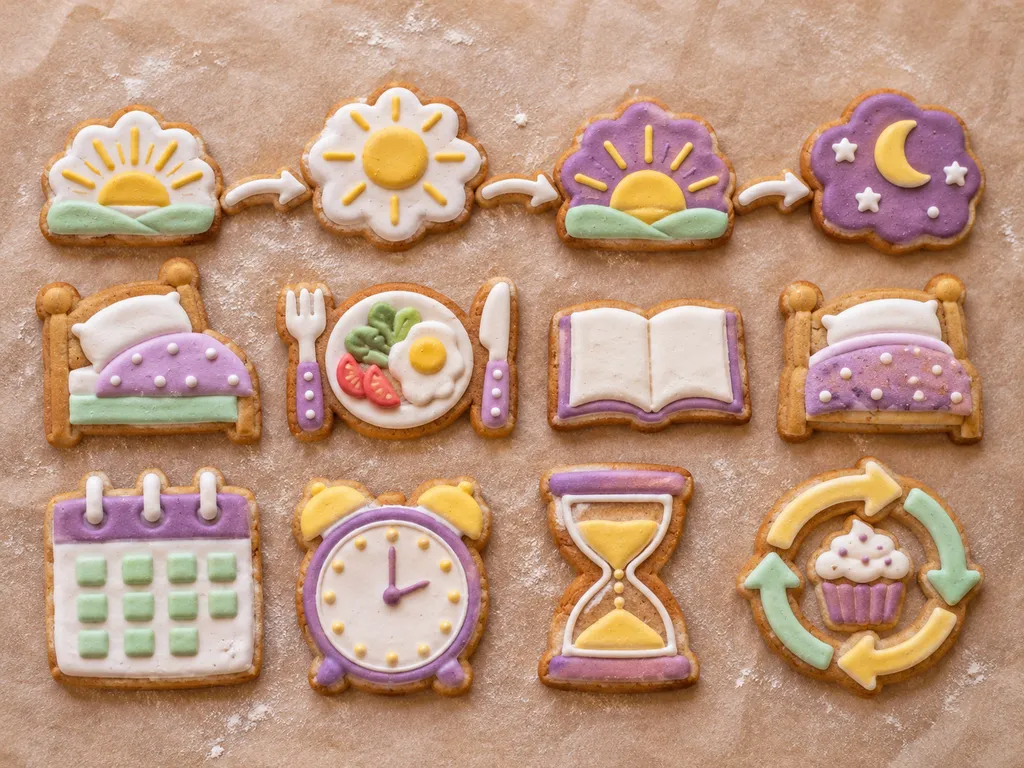
Match the time expression to the verb tense. “Yesterday” points to the past: “We visited the library yesterday.” “Tomorrow” points to the future: “We are visiting the library tomorrow” or “We will visit the library tomorrow.” The intended meaning determines the future form.
Use for with a duration and since with a starting point. “We have lived here for two years” states the duration. “We have lived here since 2024” states the starting point. Younger children can practise for with short actions before learning the present perfect: “Read for five minutes.”
Keep sentences easy to follow. One time expression often suffices: “We went to the market yesterday morning.” Two expressions can work when their meanings agree, but “yesterday tomorrow morning” cannot describe one time. Draw a timeline when expressions conflict.
Common Mistakes and How to Correct Them
Children may place every time word before the verb. “We yesterday played football” is understandable, but standard English favours “We played football yesterday.” Move yesterday to the end, or place it first for emphasis: “Yesterday, we played football.”
Children may pair a future expression with an incomplete verb form. Change “We are go tomorrow” to “We are going tomorrow” or “We will go tomorrow.” Meaning governs yet and already: “We have already eaten” is complete; “We have not eaten yet” remains unfinished.
Adverbs of Time for Kids: A Practical Guide supports correction without turning conversation into a test. Repeat the sentence naturally, then ask: “Did it happen yesterday or tomorrow?” Across LearnLink lessons, our tutors model the corrected pattern while keeping attention on meaning.
Practice Activities at Home or in Lessons
Practise through familiar routines. Say a sentence without its time expression, then offer two choices: “We brush our teeth now or next year?” Younger children can point or act out the answer. Older children can explain which option fits.
Choose the Best Time Expression
Use these choices once each: yesterday, now, soon, every Saturday, for ten minutes.
1. We are packing our bags ____.
2. They visited their grandparents ____.
3. The lesson will start ____.
4. We play chess ____.
5. Please read ____.
Answers: 1. now; 2. yesterday; 3. soon; 4. every Saturday; 5. for ten minutes.
After checking, ask which question each expression answers: when, how long, or how often. The explanation connects each example to its rule and reveals whether the child understands the meaning instead of guessing from word order.
Move the Time Expression
Rewrite each sentence with the time expression at the beginning. Add a comma where needed.
1. We will make soup tomorrow.
2. The family watched a film after dinner.
3. We practise new words every evening.
Answers: 1. Tomorrow, we will make soup. 2. After dinner, the family watched a film. 3. Every evening, we practise new words.
Finish with a personal sentence: “I played outside yesterday,” “I am doing my homework now,” or “We visit our cousins every summer.” Accept an accurate sentence first, then correct its word order or punctuation.
For the rule wording, Wikipedia — English Grammar is a useful reference while the practice examples here stay adapted for children.
Frequently Asked Questions
At What Age Can Children Learn Adverbs of Time?
Children can learn basic time words once they discuss routines and events. Now, later, today, and tomorrow suit young learners. Older children can add duration, frequency, sequence, already, and yet. Match examples to the child’s language level, not only age.
Do Time Adverbs Always Go at the End?
No. Many expressions can begin or end a sentence: “Tomorrow, we will travel” and “We will travel tomorrow.” Short adverbs may stay near the verb: “She is still reading” and “They have already finished.” Position depends on the expression, verb form, and emphasis.
What Is the Difference Between Adverbs of Time and Frequency?
Adverbs of time describe when, how long, or how often an action happens. Frequency adverbs answer “How often?” Always, sometimes, rarely, and never belong to this group. Every week and twice a month perform the same role as multiword expressions.
How Can a Multilingual Child Practise These Words?
Connect English expressions to routines the child understands in any language. Use a family calendar, timeline, or morning and evening pictures. Contrast yesterday with tomorrow. Keep other languages available; the goal is accurate English meaning and sentence order.
How Should Parents Use This Guide?
Use Adverbs of Time for Kids: A Practical Guide as a reference, practising one group at a time. Begin with when, then cover duration, frequency, already, still, and yet. Keep sessions brief, request one personal example, and revisit difficult patterns during another routine.
If your child needs steady speaking practice, start small — choose a trial lesson.
Stay updated on our latest tips and resources by following us on Instagram LearnLink.